
 NL
NL Mooleh Manay Excelsa
| Price per 1kg. |
€ 90,00 |
|---|---|
| Price updated: |
4th Oct 2025 |
|
Door te kiezen voor een verpakking van 1000 gram (1 kg) |
|
Beans Parameters
Roast Levels: Light Roast
Roasting Methods: Drum roasting
Caffeine: With caffeine
Sorts: Excelsa
Processing methods: Experimental
Acidity Levels: Medium acidity
Additional
Mooleh Manay Excelsa comes from a family plantation in Coorg, India, where coffee grows under shade trees amid rich biodiversity. Shokunin roasts it lightly as an omniroast, allowing the bean to excel both in filter and espresso. The flavor profile is distinctly tropical, with notes of mango, passionfruit, jackfruit and lychee, a full body and a long, sweet finish. The coffee is naturally processed with an anaerobic fermentation of 48 to 84 hours and a proprietary yeast culture, which enhances the fruit aromas. Excelsa contains less caffeine than Arabica and is scarce as a microlot. Sustainable cultivation and transparent trade are central
More About Mooleh Manay Excelsa
Origin and estate
- The Mooleh Manay coffee comes from a family plantation in Coorg, Karnataka (South India), close to the Harangi reservoir in one of India’s largest coffee regions.
- The estate was set up in 2013 by G.G. Padmashree (a fourth-generation coffee grower) and is now run by the couple Komal Sable and Akshay Dasrath.
- Coffee bushes grow under tall shade trees such as silver oak, rosewood and jackfruit, together with pepper vines and fruit trees, creating rich biodiversity on the farm.
- Wildlife flourishes on the grounds, with deer, wild boar and notable birds (such as green pigeons and grey hornbills) regularly spotted among the coffee plants.
- The name "Mooleh Manay" means "corner house" in Kannada and playfully refers to the plantation’s location and history.
Roast profile
- Stielman (Shokunin) roasts this coffee lightly to preserve the natural flavors and aromas, characteristic of their style which keeps as many fruity notes intact as possible.
- The roast is a so-called omniroast, a profile developed so the coffee can be prepared both as filter coffee and as espresso with a pleasant balance.
- Each week small batches are roasted on a Giesen W6A drum roaster in Rotterdam, after which the beans are packed directly into airtight, resealable bags for optimal freshness.
- Excelsa beans remain lighter in color than Arabica during roasting, so the roaster allows a little more development time after first crack, ensuring all flavors fully come through.
- The result is a coffee without roast bitterness, with an emphasis on sweetness and drinkability, all the bean's unique flavor nuances take center stage in the cup.
Flavor and aroma
- This coffee bursts with tropical fruit tones: taste, among others, mango, passion fruit, jackfruit and lychee for a truly exotic character.
- Delicate floral accents can also be detected in the aroma, with some perceiving a hint of eucalyptus among the scents, which contributes to the complexity.
- A subtle spicy sweetness runs through the flavor profile; think of hints of ginger candy or even liquorice, which give the fruit flavors a surprising twist.
- The body is full and almost syrupy. This Excelsa has a medium to full mouthfeel, allowing the natural sweetness to linger long in the finish.
- The flavor profile is very layered and complex, with each sip revealing new nuances. Despite all the exuberant flavors, the coffee remains well balanced with a mild, smooth finish.
Processing Method
- This coffee was processed naturally with an anaerobic fermentation. Immediately after picking the coffee cherries are placed in water to remove unripe fruits (float test), leaving only the perfectly ripe berries.
- The whole coffee cherries are then placed in sealed tanks without oxygen for a controlled fermentation of about 48–84 hours. During this phase enzymes and yeasts break down the fruit sugars.
- A home-grown yeast culture is added to the tanks. This special yeast feeds on the sugars from the pulp and develops intense tropical fruit aromas, while the characteristic spicy character of Excelsa is preserved.
- After fermentation, the fermented coffee cherries are carefully dried. They are dried inside a polyhouse (a type of greenhouse made of transparent plastic) to protect them from the elements and ensure even, slow drying.
- Because of this unique processing method, an anaerobic natural fermentation, the coffee gains extra pronounced flavors. The process yields an explosion of fruity notes, while also allowing the inherent qualities of the Excelsa bean to shine.
Variety
- Mooleh Manay Excelsa is made from Coffea Excelsa, a rare coffee species that does not belong to the Arabica family and therefore tastes distinctly different from the more familiar Arabicas or Robustas.
- Excelsa plants grow as large trees rather than shrubs. Local coffee farmers also call them "Mara Kaapi", which means 'tree coffee' in the regional language, a reference to their size.
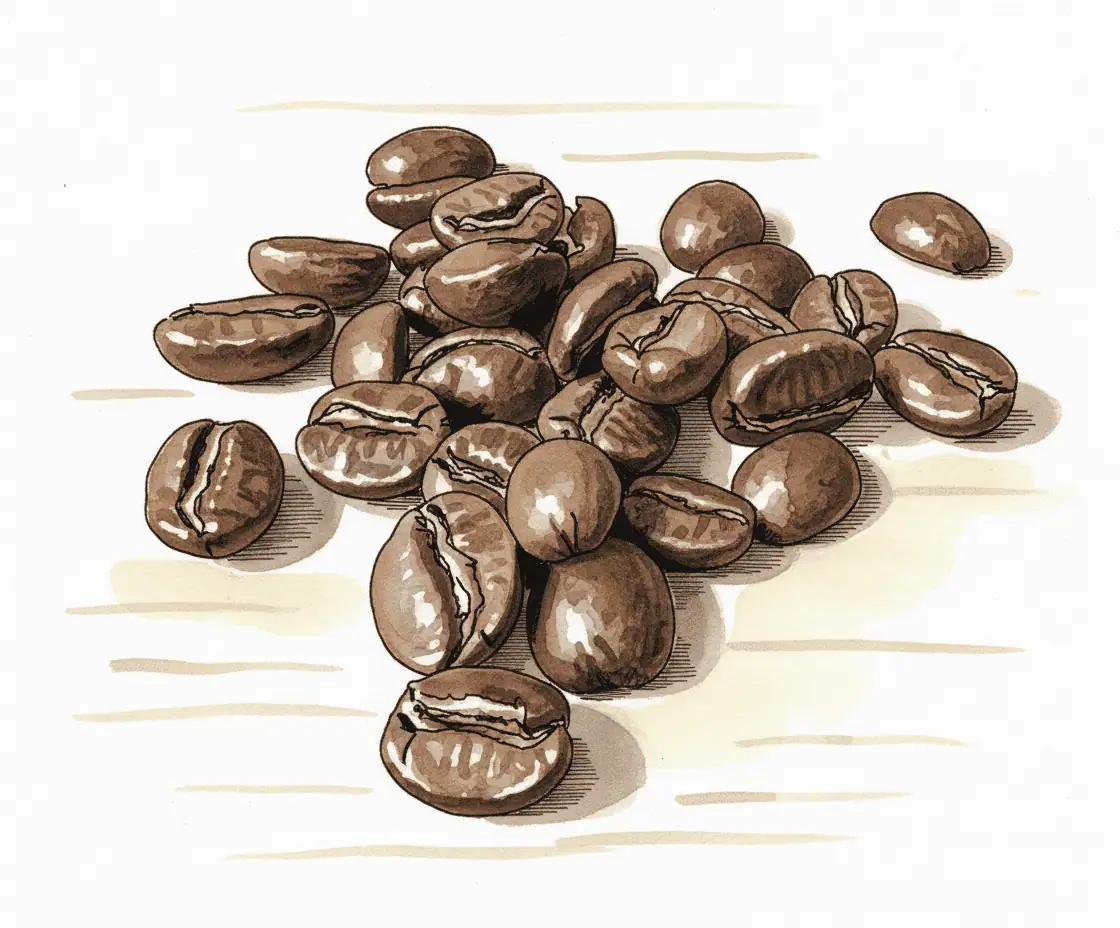
- The Excelsa coffee beans themselves are smaller and noticeably rounder in shape compared to regular coffee beans. That rounded, smaller size is one of the physical characteristics of this variety.
- This variety has a lower caffeine content (approximately 0.7–0.98%) than Arabica coffee. That means a cup of Excelsa coffee typically contains less caffeine and can therefore taste somewhat milder.
- Excelsa is rarely cultivated on a large scale. In the past many Indian farmers planted Excelsa trees along the edges of their fields as shade trees and an extra source of income. Only recently, partly thanks to Mooleh Manay, this variety has gained attention as a high-quality specialty coffee.
Sustainability and ethics
- On the Mooleh Manay plantation work is done with respect for nature. No chemical herbicides are used, weeds are removed by hand or with simple tools. Fertilizer is used sparingly and applied very selectively to keep the soil healthy.
- The coffee grows amid a diversity of native trees and crops. These shade trees, including rare species such as wild jackfruit trees and yellow teak trees, protect the coffee from intense sunlight and promote a healthy ecosystem on the farm.
- Thanks to this wooded setting, all kinds of animals feel at home on the estate, from deer and wild boar to colourful birds. The preservation of biodiversity is therefore central, which also contributes to natural pest control.
- The farmers (Komal and Akshay) use a data-driven approach to improve their cultivation. They collect data on everything from soil to climate in order to achieve maximum quality with minimal resources, without burdening the environment.
- Moreover, Mooleh Manay experiments with growing lesser-known coffee varieties and grafting different coffees onto each other. This pioneering work in species diversity increases climate resilience, important for the future of coffee in times of climate change.
Brewing Recommendations
- Thanks to the omniroast profile, this coffee can be brewed in many ways. Whether using a drip brewer, a manual pour-over or an espresso machine, the flavor remains equally balanced and pleasant across all methods.
- To highlight the refined fruity aromas, brewing with a filter (such as a V60 or Chemex) is recommended. Use freshly ground coffee and water at around 92–94 °C; a ratio of approximately 1:16 (for example 15 grams of coffee to 240 ml of water) often yields a great result.
- Prepared as an espresso it's a real conversation starter: the shot has a full, creamy texture and bursts with unusual fruitiness but without harsh bitterness. Use a slightly longer extraction time and lower pressure for a sweeter, smoother espresso experience.
- This Excelsa also lends itself well to experimental preparations. For example, as a cold brew it can come out surprisingly refreshing and fruity on warm days, thanks to the bean's low bitterness and bright sweetness.
- The roaster particularly recommends playing with recipes. Because the coffee has such a pronounced profile, there is much to discover. Try different brewing methods and grind sizes, the coffee is forgiving and rewards experimentation with new flavor nuances each time.
Prices and reviews
- Mooleh Manay Excelsa is considered a groundbreaking coffee. It is likely the first specialty-grade Excelsa produced in India, something that has not gone unnoticed by the international coffee community.
- Several specialty roasters worldwide have offered this exceptional bean as a limited edition. In 2021 an American roaster introduced the Excelsa as “Rare Find” and it sold out quickly due to high demand. Demand was also strong in the Netherlands at the release via Shokunin.
- Customer reviews are unanimously glowing. Tasters praise its unique character; some called it the most unique coffee they have ever drunk, because of the exotic flavours and the absence of bitter notes. On the Shokunin site this coffee consistently received 5-star feedback.
- Professionals are impressed too. Importers described the flavour as "creamy vanilla ice cream with an almost overwhelming liquorice-like sweetness, alongside notes of papaya and raspberry", which are not the usual descriptors for coffee! Such enthusiastic cupping scores underline its exceptional quality.
- Although this Excelsa has not won official awards (such as a Cup of Excellence), it is regarded as a gem within the coffee industry. The fact that an Excelsa variety receives such high cupping scores and fan reactions is recognition in itself for the innovation and quality of Mooleh Manay.
Packaging design
- Stielman / Shokunin packs the coffee immediately after roasting in high-quality bags with a one-way valve and a resealable strip. This preserves the aroma optimally, and allows customers to reseal the package airtight after opening to maintain freshness.
- The packaging design is minimalist and modern. Instead of flashy colours or imagery, the emphasis is on a clear label with the coffee's name and the tasting notes. The branding exudes craftsmanship, fitting the name "Stielman" (craftsman), with a clean design that radiates a focus on quality.
- Notably, in the past Stielman printed little origin information on the bag, as the intention was for coffee drinkers to choose primarily by taste rather than by country. Nowadays Shokunin does of course state the origin on the website (India, in this case), but the packaging itself remains understated and lets the coffee speak for itself.
- Each bag contains all essential details: roast profile (omniroast), a flavour description and brewing recommendations. This informative yet restrained label helps both enthusiasts and newcomers know what to expect without being overloaded with technical details.
- The whole presentation feels very professional and underscores the premium position of this coffee. From the luxurious matte finish of the bag to the carefully applied label, everything about the packaging makes it clear that Mooleh Manay Excelsa is a special, limited-availability specialty coffee.
Availability and price
- Mooleh Manay Excelsa is available only in limited editions. In the Netherlands it is offered through Shokunin Coffee Collective (formerly Stielman Koffiebranderij) in Rotterdam, both via their webshop and sometimes in the physical coffee shop when in stock.
- Due to the scarcity of this bean the rule applies: once it's gone, it's gone. Often it is a microlot that sells out quickly. Interested parties would do well to keep an eye on any pre-orders or announcements, because only small quantities are available per harvest year.
- The price of this coffee is higher than average in the specialty market, which is logical given its exclusivity. A 250 gram bag costs around €25, while 1 kg (for the serious enthusiast) is approximately €90. This premium price reflects the labor-intensive process and the unique variety.
- Despite the higher price, the value for enthusiasts is clear: one gets a unique taste experience rarely encountered in coffee. Moreover, a large portion of the proceeds is shared directly and transparently with the farmer and importer, given the focus on fair trade in the supply chain.
- In short, Mooleh Manay Excelsa is a remarkable coffee that is not always easy to find. But for those willing to seek it out (and pay a little more), this bean offers a story, a sustainable origin and, above all, an unmatched flavor sensation that more than justifies its price.
Reviews
There are no reviews yet.