
 NL
Klingelbeek and the surrounding area do not have a busy coffee strip, but rather a calm daytime scene shaped by walking, work, care and neighbourhood connections. Atelier Giri, Kookplaats Arnhem and ’t HoeveCafé are the main anchor points.
Roasters in Klingelbeek e.o.
Beukenhorst Koffie
Coffee Bars in Klingelbeek e.o.

Café Pierre
Café Pierre is the museum café of Museum Arnhem. This article describes its espresso-oriented coffee menu, its suppliers, its design, and its function as a freely accessible meeting place.
More over Klingelbeek e.o.
Klingelbeek and surroundings: Coffee at a slower pace
Klingelbeek and the surrounding areas in Arnhem aren’t exactly neighborhoods with a dense row of specialty bars. The area has a much calmer profile. Here, coffee is intertwined with walking, working, healthcare, lunch, and community connection. This is precisely what makes the neighborhood interesting for entrepreneurs and coffee lovers who look beyond the well-known hospitality strips.
The area encompasses Klingelbeek, Het Dorp, and Mariëndaal. Landgoed Klingelbeek, Arnhems Buiten, and Hoeve Klein Mariëndaal also fit this profile. The bustling coffee scenes of Arnhem Centrum, Lombok, Klarendal, and Velperpoort fall outside this scope. This creates a clear picture of a small, green, and above all, service-oriented coffee market.
From village café to estate coffee
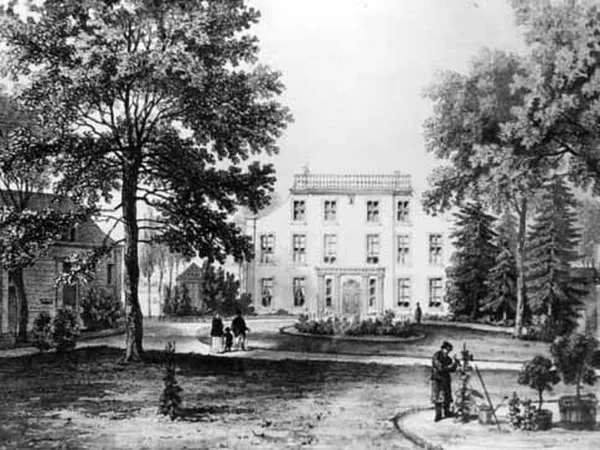
The coffee culture of Klingelbeek didn’t start as an urban café strip. Local history describes the Klingelbeek of the sixties as a village within the city. There were farms, a bakery, narrow streets, and residents who all knew one another. Coffee was part of that familiar, local routine.
Café Klingelbeek was a quintessential village café back then. Children played outside, while the evening trade brought in a significant portion of the customers. Yet, even in the sixties, the café was described as a place that had lost much of its old community function.
Later, the focus shifted. Estates, healthcare facilities, and the former KEMA site gave coffee a new role. The tone wasn’t set by nightlife or fast turnover, but by work meetings, visitors, lunch, care, and quiet encounters.
The current players in the neighborhood
The modern coffee scene here is compact. You won’t find three to five true specialty bars within the neighborhood boundaries. No local micro-roaster, filter bar, or espresso-focused third-wave shop was identified. Nevertheless, the neighborhood has a few clear anchor points.
- Atelier Giri located at Klingelbeek 60, is the most distinct destination. The business centers around coffee, matcha, patisserie, food, and workshops.
- Kookplaats Arnhem at Utrechtseweg 310 primarily serves the rhythm of Arnhems Buiten, offering cappuccino, espresso, lunch, meetings, and events.
- ’t HoeveCafé Hoeve Klein Mariëndaal combines coffee, tea, homemade cake, lunch, high tea, and a terrace with its role as a care farm.
Atelier Giri stands out most for its Japanese influence. The establishment works with ceremonial Uji matcha, sourced directly from Japan, and offers plant-based food. In doing so, this spot adds a touch of international flair to an otherwise quiet residential neighborhood.
Kookplaats Arnhem serves a different purpose. The location fits the former KEMA site and the workday rhythm of Arnhems Buiten. Here, coffee is part of a broader offering for lunch, meetings, events, and visitors.
At Hoeve Klein Mariëndaal, coffee is less about technique and more about pace. The value lies in the estate, the garden, the homemade cake, and the inclusive day activities. For hikers, families, and seniors, this is a winning combination.
A social cup of coffee
In Klingelbeek and the surrounding area, coffee acts primarily as a gentle connector. The neighborhood association Hoogstede-Klingelbeek, founded in 1978, organizes activities for all ages. Think of King's Day, a neighborhood quiz, Klingelkamp, and clubs for bridge, chess, jeu de boules, reading, Spanish, climate, and safety.
The care environment also plays a visible role. Local reports from 2024 mention a coffee morning at the Klingelpoort. While not a specialty event, it is nonetheless important. There, coffee becomes an accessible reason for residents, care users, and neighbors to meet.
Formal coffee events or cuppings are not prominent. Instead, the neighborhood is characterized by small rituals: a cappuccino before a meeting, coffee and cake after a walk, or matcha with pastries during a planned visit.
Demographics drive demand
The market is small but clear. By 2026, Klingelbeek and surroundings will have approximately 1,582 inhabitants, 600 households, 824 homes, and 335 business locations. This volume supports a few daytime businesses, but not a dense cluster of coffee bars.
- 31% of residents are 65 years or older.
- 18% fall into the 25 to 45 age group.
- 62% of homes are owner-occupied.
- The average household size is around 2.0 people.
These figures explain a lot. Demand focuses more on lounging, tranquility, accessibility, and familiarity than on fast-paced takeout flows. The neighborhood is not driven by a student economy. The peak moments align with office hours, weekend strolls, and community or healthcare activities.
Consequently, the local flavor profile is broad but not hectic. Traditional coffee paired with pastries remains relevant at Hoeve Klein Mariëndaal. Cappuccino and espresso fit the vibe at Kookplaats. Atelier Giri adds matcha, patisserie, and plant-based dishes as a distinguishing layer.
Sustainability as a local narrative
In Klingelbeek e.o., sustainability takes a practical form. There is no established neighborhood-wide system for reusable cups or coffee ground composting. Nevertheless, several spots integrate green choices into their daily offerings.
Atelier Giri describes its kitchen as plant-forward, linking its menu to sustainable gastronomy, seasonal produce, and local ingredients. Hoeve Klein Mariëndaal works as much as possible with organic and local products, including fruits and vegetables from their own garden. Kookplaats pairs coffee and lunch with organic, regional, and seasonal ingredients.
This ethos extends beyond the hospitality sector. Hoogstede is described as a highly sustainable residential care center, featuring LED lighting and sustainable or natural building materials. As a result, the coffee culture is supported by a broader eco- and care-oriented identity.
Opportunities for operators
The core lesson is clear. Klingelbeek e.o. does not need another bustling espresso bar with high turnover. The neighborhood is better suited to a calm, local, and day-oriented concept. Strong coffee, quality patisserie, visible sustainability, and small-scale programming can deliver more value here than sheer volume.
For the Arnhem coffee sector, Klingelbeek e.o. is thus a micro-market with its own distinct character. Its strength lies in the landscape, care, community, the workday, and quiet hospitality. It is precisely this combination that makes the neighborhood different from the well-known urban coffee zones.