
 NL
NL In Zuidwest Groningen, coffee revolves around daily routines, connection and proximity. From Overwinningsplein to Hoornse Meer, the district shows how coffee works as a social engine for the neighbourhood.
Roasters in Zuidwest
Cook & Boon
Laurens Coffee
Coffee Bars in Zuidwest

Laurens Coffee
Laurens Coffee is a coffee bar and lunchroom in Hoornsemeer, Groningen. This article describes the background, offerings, coffee beans, local activities, and public mentions.
More over Zuidwest
Southwest Groningen: Coffee Culture as a Community Hub
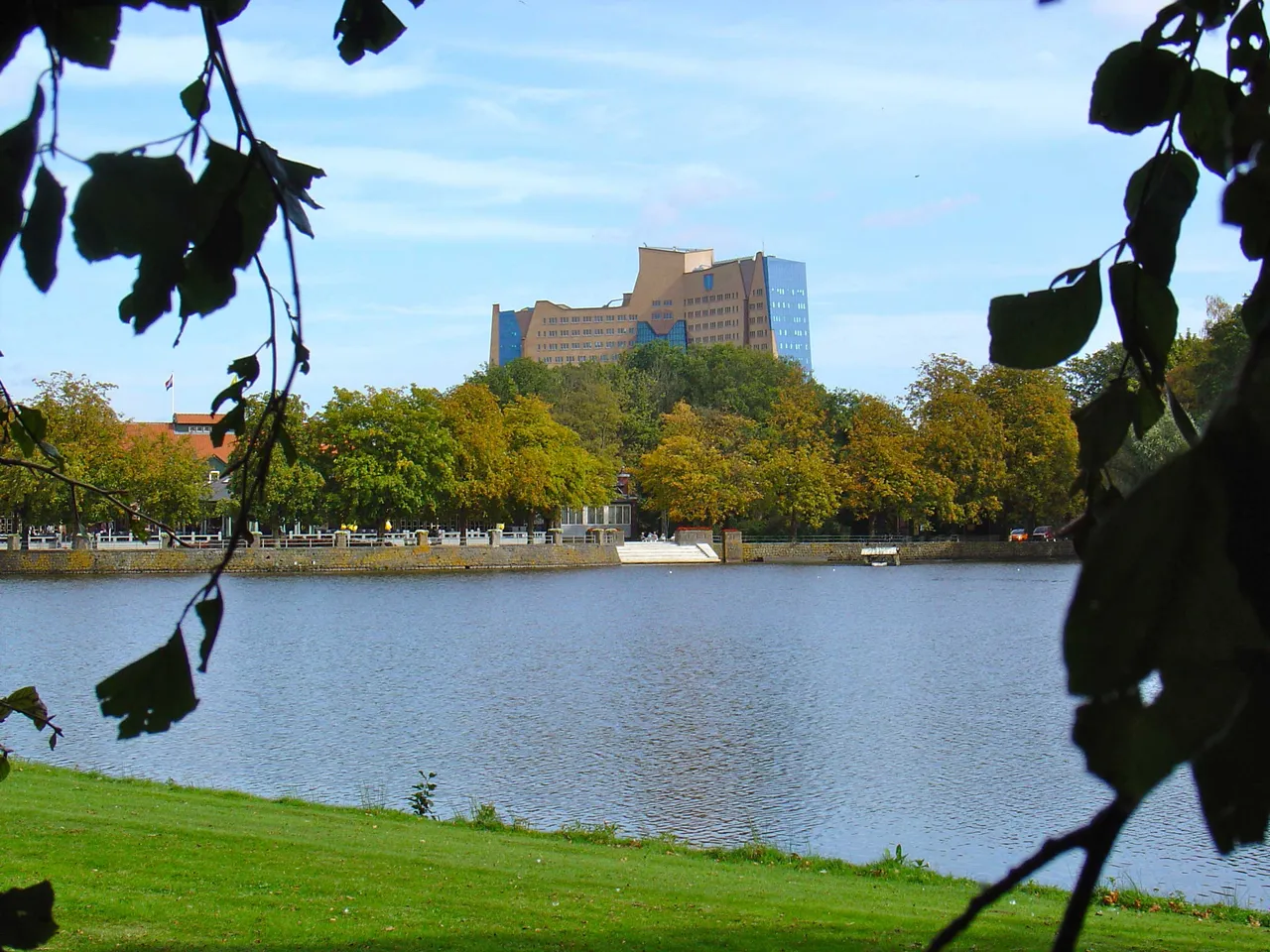
Southwest Groningen doesn’t have a coffee story that begins with historic coffee houses, old roasteries, or student cafes. The area comprises Corpus den Hoorn, Hoornse Meer, Hoornse Park, Van Swieten, Piccardthof, and Bruilweering. Here, coffee culture has been shaped primarily by daily routines: running errands, meeting neighbors, participating in community activities, and strolling along the Hoornse Meer.
This is what makes Southwest interesting for entrepreneurs and coffee lovers alike. The neighborhood demonstrates that coffee isn’t always about latte art, curated filter menus, or a dense network of specialty shops. In Southwest, coffee acts primarily as an accessible community engine. While the product is important, the location and its social role carry just as much weight.
A post-war neighborhood with practical coffee roots
Corpus den Hoorn was built between 1956 and 1960 as Groningen’s first true post-war neighborhood. The district was designed around the idea that daily life should happen close to home. Schools, churches, shops, and a central community center together formed the foundation of the neighborhood.
Because of this, coffee didn’t emerge from cafe romanticism, but from practical use. Overwinningsplein played a key role early on; in 1962, the square was considered the first shopping center in one of Groningen’s suburbs. To this day, the shopping center presents itself as the heart of Corpus den Hoorn, De Wijert, Hoornse Meer, and Hoornse Park, featuring a Wednesday market among other attractions.
Later, the coffee center of gravity shifted partly to the south. From 1988 until the mid-nineties, Hoornse Meer was developed as an urban waterfront residential area. The S.O.J. Palmelaan leads toward the lake and recreation area, which explains why a modern coffee player fits logically in that location.
The key coffee players of today
Southwest doesn’t have a compact third-wave cluster. The current coffee scene consists of scattered locations that align well with the rhythm of the neighborhood. They serve residents, walkers, market visitors, parents, seniors, and those seeking community support.
- Laurens Coffee, S.O.J. Palmelaan 297, is the most distinct coffee bar and lunchroom in Southwest. The establishment offers coffee to-go, sandwiches, homemade sweets, and coffee beans.
- Bakkerij Haafs, Overwinningsplein 109, opened in March 2024 and is the primary commercial coffee stop near the shopping heart.
- De Semmelstee, Semmelweisstraat 182, calls itself the living room of Corpus den Hoorn, Hoornsemeer, Piccardthof, and Ter Borch.
- Mennoos Kookerij, Paterswoldseweg 267-0, connects food, community, and social entrepreneurship with the neighborhood.
Beachclub Kaap Hoorn is often associated with the recreational image of the Hoornsemeer. However, this location falls outside of Zuidwest, as the address is Kaapse Baan 1 in Haren. To maintain a pure neighborhood profile, this establishment is not included.
Coffee as social infrastructure
The social role of coffee is remarkably strong in Zuidwest. At De Semmelstee, coffee is integrated into a broad program. Activities range from yoga, cooking, bridge, handicrafts, and billiards to tai chi, painting, bingo, SeniorWeb, sjoelen, dancing, and klaverjassen.
Young families also find their coffee moment here. The Ouder & Kind morning takes place every Wednesday from 10.00 to 11.30. Parents catch up over coffee or tea while children play. The activity is free and linked to WIJ Corpus den Hoorn.
For older residents, there is Maandagmorgen Muze. This activity focuses on those aged 55–plus from Corpus den Hoorn and Hoornse Meer. The morning begins with coffee or tea, followed by creative assignments and workshops centered around writing, theater, singing, and dance.
Coffee also plays a clear role at WIJ Entree Zuid. Residents from Corpus den Hoorn, Hoornse Meer, Hoornse Park, and Piccardthof can visit Paterswoldseweg 267. There, they are welcomed with coffee or tea as a low-threshold start for advice and support.
Local demand: small, residential, and highly educated
The figures paint a picture of a compact residential area with local demand. In 2026, Zuidwest had a total of 10,649 inhabitants, 6,120 homes, and 6,000 households. The average household size was 1.7 people. Additionally, 57 percent of the homes were rental properties.
That profile fits a market for daily, accessible coffee. Zuidwest is not a destination for coffee tourism, but a neighborhood where residents drink coffee during the day while running errands, having lunch, walking, and meeting others. Furthermore, the neighborhood is highly educated: in 2024, 50.5 percent of residents between 15 and 75 years old had a higher education level.
Hoornse Meer strengthens the recreational part of this profile. In 2026, this neighborhood had 4,213 inhabitants, 2,507 homes, and 22 hectares of water. Consequently, Laurens Coffee fits well into a pattern of walking, grabbing a coffee to go, lunch, and brief encounters by the lake.
Sustainability without a major campaign
In terms of sustainability, Zuidwest primarily shows small-scale signals. There is no clear evidence of a neighborhood-wide reusable cup system or an official coffee grounds program. Nevertheless, there are starting points regarding fair trade, organic coffee, and reuse.
Laurens Coffee sells beans, subscriptions, and a tasting kit available exclusively at the coffee bar at the Hoornsemeer. The website also mentions that coffee farmers receive a fair price. Mennoos connects the hospitality sector via Kas van Kaat with respect for the environment, nature, and each other, and mentions organic coffee.
Furthermore, the neighborhood features community sharing cabinets at the Immanuelkerk, De Semmelstee, and WIJ Entree on the Paterswoldseweg. While these aren’t coffee-specific, they fit into the same accessible community structure. For entrepreneurs, the opportunity therefore lies not in trendy buzzwords, but in practical steps: reusable cups for those on their daily walk, coffee grounds for community gardens, and bike delivery between Corpus den Hoorn and Hoornse Meer.
What Zuidwest teaches us about neighborhood coffee
Zuidwest proves that coffee culture doesn’t always have to be visible through trendy streets or long queues. Here, the strength lies in proximity, regularity, and familiarity. Coffee supports the shopping route, the community room, the parent’s meetup, the creative morning, and the stroll along the water.
For café owners, bakers, and roasters, this is a valuable lesson. In this neighborhood, coffee wins primarily when it fits into the residents’ lives. High quality remains essential, but success depends mostly on accessibility, established rhythms, and strong local ties.