
 NL
Marsdijk shows how coffee culture takes shape in the community centre, sports hall, bakery, and church hall, with coffee serving as an accessible form of social infrastructure.
Roasters in Marsdijk
Beukenhorst Koffie
Coffee Bars in Marsdijk

Jumpstyle Assen
Jumpstyle Assen is described as an activity park with a lounge and simple food and beverage service. Coffee is available as part of the offering, with Beukenhorst Koffie named as the supplier.
More over Marsdijk
Marsdijk: coffee culture as a community function
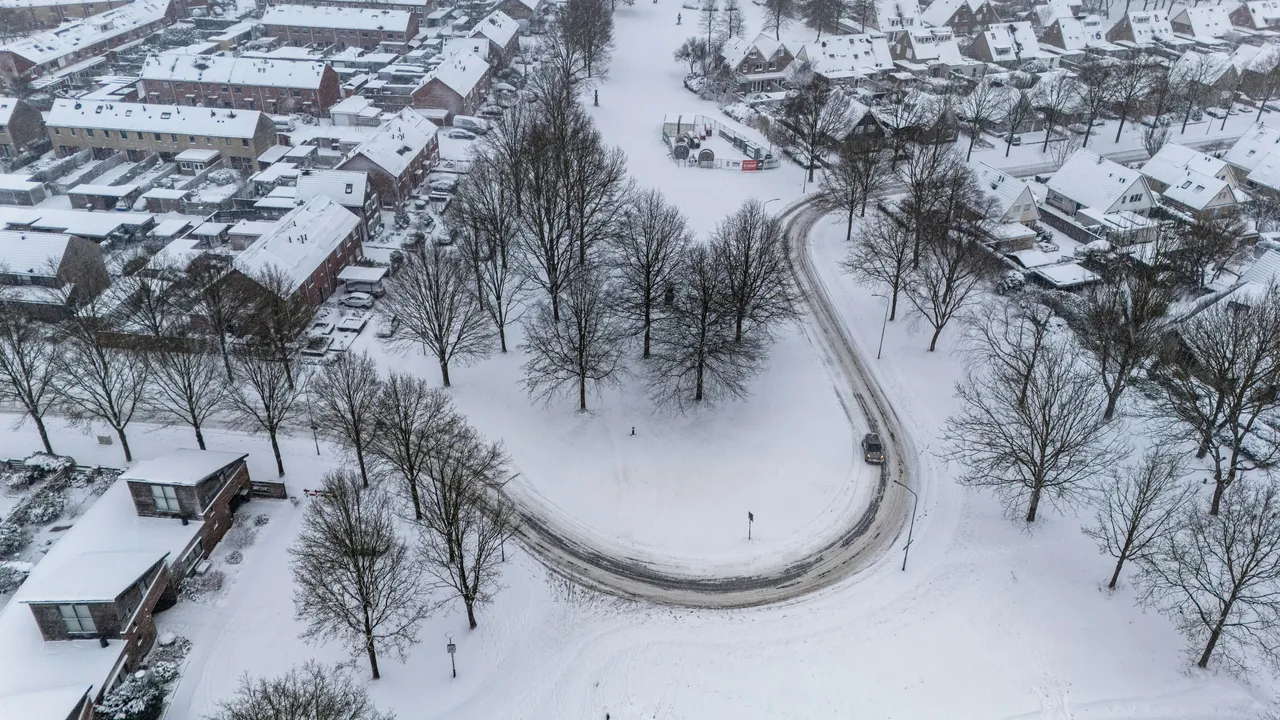
Marsdijk in Assen doesn’t have a coffee story that begins with old coffee houses, city cafés, or roasteries. The neighborhood was primarily shaped by housing developments from the eighties and early nineties. This led to a practical coffee culture, strongly linked to living, sports, school, church, and shopping.
For café owners, baristas, and roasters, Marsdijk is interesting precisely because of this down-to-earth foundation. Coffee doesn’t play a leading role as a lifestyle product here. Instead, it serves primarily as a social tool: a quick cup during activities, after sports, at the bakery, or in the community center.
A young neighborhood without a classic café past
The historical layer of Marsdijk differs from that of older city districts. The neighborhood was built on former agricultural land and acquired a distinct residential character. Municipal plans describe Marsdijk as a residential area with many families with children. Old farms along the historic Marsdijk still serve as reminders of the former landscape.
What is missing is striking. No documented layer of historical cafés, coffee houses, roasters, or well-known espresso bars was found. Local history revolves mainly around housing, shops, churches, sports, and community buildings. Consequently, the core of the coffee culture lies not in hospitality heritage, but in daily routines.
The Marsdijkhal at Kleuvenstee 3a became an early social anchor point in the late eighties. Sports, school gym, local gatherings, and later the sports café made the hall a natural place for socializing. Similarly, the Marsdijk shopping center, with the Kleuvenstee as a retail cluster, linked coffee to shopping and brief visits.
Where coffee happens now
The current coffee scene in Marsdijk shows few signs of distinct specialty coffee. Within the neighborhood boundaries, coffee is mainly integrated into community work, sports, bakeries, snack bars, and family entertainment. Assen’s more clearly positioned specialty scene lies outside Marsdijk, such as at SIJL at Gedempte Singel 15.
The primary coffee spots in Marsdijk each serve a different purpose. Together, they represent an accessible market where convenience and social connection carry more weight than origin stories or brewing methods.
- Wijkcentrum De Dissel, Kleuvenstee 1A: the central hub for a “bakkie koffie/thee” during activities such as jeu de boules, billiards, language classes, and kickboxing.
- Sportcafé De Marsdijkhal, Kleuvenstee 3a: a café-style venue for darts, gatherings, corporate drinks, parties, and post-game socializing.
- Jan Fleddérus, De Echte Bakker Marsdijk, Kleuvenstee 30: a visible bakery with roots in Zeijen dating back to 1899, focusing strongly on bread, pastries, and local sweets.
- Jongman Marsdijk Snack- en Broodjeshuis, Kleuvenstee 72: a practical snack and sandwich shop where coffee is listed on the menu for “€1,95”.
- Grand Café SMAAK / Plaza Sportz Assen, Stelmakerstraat 17: a broader family, leisure, and dining location on the eastern edge of Marsdijk.
Coffee as social infrastructure
The strongest conclusion is that coffee in Marsdijk primarily serves as social infrastructure. It is less about laptop culture, cuppings, or single-origin menus, and more about connection, recognition, and having a reason to step into a shared space.
Wijkgebouw De Dissel plays a leading role in this. Every Monday from 10:00 to 12:00, there is a Koffieochtend Marsdijk. The first coffee or tea, accompanied by a cookie, is on the house. On Monday afternoons, a handicraft group meets from 14:00 to 16:00, where conversation, coffee, tea, and crafting come together.
Other gatherings also use coffee as a gentle icebreaker. The Opstandingskerk organized Wednesday mornings with coffee or tea from 10:00 to 12:00. Macula Café Assen uses De Dissel for meetings, where a “€3” contribution includes two coffees and/or teas. Senior afternoons, Christmas markets, and neighborhood celebrations are similarly paired with coffee, tea, cake, and “gezelligheid”.
Demographics Define the Local Taste
In 2026, Marsdijk had 11,820 residents. In 2025, the neighborhood counted 5,070 households and 4,990 dwellings. Of these, 81% were owner-occupied. This points to a stable, suburban residential base with established patterns revolving around grocery shopping, school, sports, and community activities.
The age distribution supports this picture. In 2026, 31% of residents were between 45 and 65 years old, and 21% were 65 or older. Only 12% fell into the 15 to 25 age group. Consequently, the neighborhood is better suited for daytime coffee, community programming, and senior activities than for a late-night café culture.
Family profiles also play a role. In 2025, 38% of households consisted of multi-person households with children. This aligns with coffee consumption near sports clubs, schools, shops, and bakery visits. The visible preference is practical: coffee paired with cookies, cake, sandwiches, pastries, or a brief social moment.
Sustainability Lives in the Architecture
No clear sustainability program was found regarding the coffee chains themselves. There is no evidence of a Marsdijk-specific reusable cup initiative, coffee ground composting, bean delivery by bike, or a local roaster with published sourcing standards.
Yet, the neighborhood does have a relevant sustainability story, primarily found in the buildings where coffee is served. Following renovation, Wijkcentrum De Dissel is completely gas-free, utilizing heat pumps, solar panels, electric cooking, and LED lighting. Sporthal Marsdijk has been fully sustainable and gas-free since the summer of 2020, featuring heating and cooling pumps, solar panels, insulation, LED lighting, and reduced water usage in renovated showers.
The sports café also aligns with this shift, as the kitchen no longer uses gas and cooks via induction. Additionally, in December 2025, Marsdijk Bloeit took over the former Opstandingskerk. Under the name de Wilg, this location is growing as a community hub for meetings and social activities, situated next to the shopping center.
What Marsdijk Teaches Us
Marsdijk demonstrates that coffee culture doesn’t always start with an espresso machine or a roastery. Sometimes it emerges in a sports hall, a community center, a bakery, or a church hall. For the Dutch coffee sector, this is a useful lesson: affordability, proximity, and social value can be just as important locally as premium quality.